











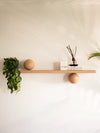


Open kitchen shelves can make your kitchen feel lighter, warmer, and more personal. Your favourite mug catches the morning light instead of disappearing behind a cabinet door. Clear glasses add a little sparkle, while a warm wooden tray softens the harder surfaces around it.
Even a small shelf can make your kitchen feel more open when everything on it has a reason to be there.
The challenge is that open shelves can become cluttered very quickly. A few cups turn into ten, bowls begin competing with jars and bottles, and empty gaps slowly get filled simply because they are there.
Good kitchen shelf decor is not about adding more. It is about deciding what deserves to stay visible.
The best open kitchen shelves balance three things: function, visual consistency, and breathing room. You should be able to reach what you use, enjoy what you see, and still have enough empty space for the arrangement to feel calm rather than crowded.
Quick answer: To style open kitchen shelves without making them look cluttered, begin with the items you actually use, group similar pieces together, repeat a simple colour palette, mix heights and materials, and leave visible space between each arrangement.
Start With a Clear Shelf Before You Style Anything
Before you buy new accessories or start moving objects from one side to another, take everything off the shelf.
An empty shelf gives you a much clearer sense of proportion. You can see how much usable space you really have, where your eye naturally lands, and which pieces are worth bringing back.
Sort what you removed into three simple groups: things you use every day, things you use occasionally, and things that are mainly decorative.
Return your everyday pieces first. Keep cups, bowls, glasses, or tea accessories where your hand can reach them easily. Then add only a few decorative objects where they genuinely improve the arrangement.
This is one of the simplest kitchen organization ideas because it prevents an open shelf from becoming an extension of an overcrowded cabinet.
Your shelf does not need to show everything you own. It should show a considered selection of what is useful, beautiful, or meaningful to you.
Gharko styling note: A useful approach is to edit before you add. When a shelf already feels busy, removing one object often improves the composition more than rearranging several others.
Choose a Cohesive Colour Palette for Kitchen Shelf Decor
Colour has a strong effect on whether your shelf feels calm or chaotic.
You do not need to make your kitchen monochrome, but limiting the display to a few related tones creates an immediate sense of order.
Cream, beige, warm wood, soft grey, muted green, clear glass, and earthy browns work particularly well in modern kitchens because you can layer them without overwhelming the room.
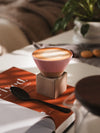
Imagine cream ceramic cups beside transparent glasses, all resting near a warm wooden tray. The materials are different, but the tones feel connected. The arrangement looks collected rather than random.
If your cabinetry is dark, lighter ceramics and clear glass can bring brightness and contrast. If your kitchen is white or beige, warm timber, amber glass, or one broader accent can stop the room from feeling flat.
The goal is not perfect matching. It is visual continuity.
You can also repeat details already present in your kitchen. Black cabinet hardware might inspire one small dark accent on the shelf, while warm wooden cabinetry can be echoed through a tray or serving board.
That subtle repetition helps your shelf feel connected to the room rather than styled separately from it.
Mix Everyday Kitchenware With Decorative Pieces
Some of the best kitchen shelf ideas begin with objects you already use.
Your favourite cups and mugs, bowls, glassware, and serving pieces do not need to disappear behind cabinet doors. If they are well designed, they can become part of your decor.
Think about your morning coffee routine.
Instead of hiding the two or three mugs you reach for every day, group them together on your open shelf. Add a small wooden tray underneath and perhaps one simple glass jar or decorative accent beside them.
Suddenly, the shelf feels styled without losing its purpose.
This is where good modern kitchen accessories earn their place. The best pieces perform two jobs: they support your everyday routine and look beautiful enough to remain visible.
Before buying something purely decorative, look at what you already own. A softly glazed ceramic cup, a speckled bowl, or a set of clear glasses may bring more warmth and personality than an accessory purchased simply to fill a space.
Use Trays and Small Groups to Keep Shelves Organised

Several small objects placed separately can make an open shelf feel scattered.
A tray gives them structure.
Keep a pair of coffee mugs together on a wooden tray with a small glass jar beside them. Instead of seeing three unrelated objects, your eye reads one organised composition.
The same principle works without a tray. A stack of bowls beside one small vase can feel complete, as can a group of clear glasses placed together rather than spread across the shelf.
Groups of three often create a pleasing sense of variation, but you do not need to follow the rule rigidly. Two beautifully proportioned pieces can look just as balanced.
What matters is that the objects have a visual relationship through colour, material, height, or function.
Trays are practical too. When you want to clean the shelf or create more working space, you can lift the entire group at once.
And in a kitchen filled with stone, glass, or stainless steel, the natural grain of wood introduces a softer, warmer texture.
Vary Height and Leave Negative Space
If everything on your shelf is the same height, the arrangement can look flat.
If every object is tall or visually heavy, it can feel crowded.
Instead, create gentle variation.
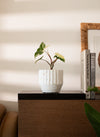
Place one taller piece, such as a vase, bottle, or leafy stem, towards one side. Bring the eye down with stacked plates, cups, or bowls, then allow another part of the shelf to remain deliberately lower.
You do not need to create a perfect staircase. Your eye should simply be able to move naturally across the display.
Just as important is the space between your arrangements.
Negative space is not wasted space.
Picture ceramic cups grouped at one end, a wooden tray near the centre and a clean stretch of empty shelf beside them. That gap allows the shapes, colours and textures around it to register more clearly.
This matters even more when styling open shelves in a small kitchen. Too many visible objects can make a compact room feel tighter.
If your floating kitchen shelves are narrow, leave more empty surface than you initially think you need.
Mix Ceramic, Glass, and Wood for a Warm Modern Kitchen
Material contrast is one of the easiest ways to make your shelves interesting without introducing lots of colour.
Ceramic brings softness and texture. A matte glaze, subtle speckling, or gently curved form feels tactile and warm against harder surfaces such as marble, stainless steel, and glass.
Clear glass brings lightness. It catches daylight and visually occupies less space than an opaque object, making it especially useful in smaller kitchens.
Wood adds warmth and depth. A wooden tray, serving board, or small natural accent can soften a shelf filled with ceramic and glass.
Try pairing two ceramic cups with a small collection of clear glasses and using wood to anchor the group. You get three different textures without making the shelf feel busy.
You do not need many materials. Two or three are usually enough.
Think about the sensory contrast too: the cool transparency of glass, the soft matte surface of ceramic, and the warm grain of wood naturally complement one another.
Create a Coffee or Tea Corner on Your Open Shelf
If you have enough room, give one part of the shelf a clear purpose.
A coffee or tea corner is one of the most practical open shelf kitchen ideas because it naturally combines styling with everyday use. Start with the tea and coffee essentials you reach for most often.
Group your everyday tea cups together, add a small tray, and keep frequently used accessories nearby. A few spoons can sit neatly on the tray rather than being scattered across the shelf.
If there is enough room, finish with one simple accent rather than several small decorative objects.
Now the shelf has a story. Instead of opening multiple cupboards every morning, your favourite ceramic coffee cups and tea accessories are already within reach.
If your cup collection has grown beyond one open shelf, a dedicated cup shelf can give your favourites a place of their own while keeping the arrangement organised.
Gharko styling note: Start with the cups or accessories you genuinely use, then add one grounding element such as a tray. Add decoration last. This keeps the coffee corner functional first and visually considered second.
If you have several shelves, avoid repeating the same arrangement on each one. One can hold cups and glasses, while another carries bowls, a wooden tray, or a natural accent.
Repeating colours and materials is enough to connect them.
Style Open Kitchen Shelves Around Your Daily Routine

There is no single shelf arrangement that works for every kitchen.
Your open shelves should reflect how you use the room.
If you cook every day, bowls, everyday glasses, or frequently used ingredients may deserve the easiest positions.
If your kitchen is where your morning begins with coffee, give cups and coffee accessories more space.
If friends and family visit often, attractive glassware and serving pieces can stay within easy reach instead of being stored at the back of a cabinet. A favourite cup and saucer set can be both ready to use and lovely to look at.
The most useful kitchen shelf decorating ideas begin with your habits rather than a photograph you saw online.
Ask yourself:
What do you reach for first in the morning? What do you use while cooking? What usually comes out when guests arrive?
Those objects are strong candidates for open shelving.
This prevents your kitchen from becoming overly staged. Your shelf can look beautiful, but it should still work when you are making coffee at 7 a.m. or preparing dinner after a long day.
That balance between usefulness and visual appeal is what makes open shelving feel natural.
Think About Cleaning Before Styling Kitchen Shelves
Open shelves live in a working kitchen, not a showroom.
Dust settles, moisture moves through the room, and shelves close to the hob can collect cooking residue more quickly.
If your shelf is near an active cooking area, prioritise pieces that are easy to wash, such as cups, bowls, plates, and glassware.
Intricate decorative objects or highly textured pieces are better placed farther from the hob, where they are less likely to need frequent cleaning.
Also consider how often an object leaves the shelf.
A mug that you use, wash, and return every day may actually be easier to maintain than a decorative object that remains untouched for months.
This practical detail is easy to overlook when browsing kitchen decor ideas, but it makes a real difference once you start living with open shelving.
A beautiful shelf that takes too much effort to clean eventually becomes frustrating. A shelf that supports your routine is much easier to enjoy.
Common Kitchen Shelf Styling Mistakes to Avoid
Open shelves rarely become cluttered because of one big mistake. Usually, it happens through several small additions.
The most common problem is filling every space simply because it exists.
You should also avoid introducing too many unrelated colours, scattering lots of small decorative objects across the shelf, making every shelf identical, or using open shelves as overflow storage when your cabinets become full.
Another mistake is buying new kitchen decor accessories before editing what you already have.
If the shelf feels crowded, remove one or two objects first.
Then look at it again.
You may find that you do not need to rearrange anything else.
Avoid displaying broken, rarely used, or difficult-to-clean objects just because there is nowhere else to put them. Open shelves work best when the pieces on them are things you are genuinely happy to see.
Seasonal styling can also become cluttered quickly. When you bring something new onto the shelf, consider rotating another piece out rather than simply adding to the existing arrangement.
A Simple Formula for Clutter-Free Open Kitchen Shelves
If you are standing in front of an empty shelf and wondering where to begin, use this simple framework:
| Element | Example | Why it works |
| Functional group | Cups, bowls, or glassware | Gives the shelf an everyday purpose |
| Grounding piece | Tray, board, or stacked plates | Visually anchors smaller items |
| Contrasting accent | Plant, vase, or sculptural object | Adds height, texture, or softness |
| Empty space | Visible gaps between groups | Keeps the display calm and easy to read |
Treat this as a guide rather than a rigid styling formula.
A narrow shelf may need fewer objects. A kitchen with patterned tiles, dark cabinets, or several strong materials may also benefit from a simpler display.
The most important question is, does the shelf still feel easy to use?
If the answer is yes, you are probably close to the right balance.
Create a Kitchen That Feels Lived-In, Not Over-Styled
The most inviting kitchens rarely look perfect.
They have a favourite mug sitting within easy reach, clear glasses catching the afternoon light, the grain of a wooden tray, a softly glazed ceramic bowl, or a small plant leaning towards the window.
These details give the room warmth because they belong to real life.
The best kitchen shelf decor gives those everyday objects enough structure to look intentional without removing their personality.
You are not trying to create a showroom.
You are creating a kitchen that works for you and still feels beautiful when you walk into it.
For Gharko, that balance between form and function is also a useful way to think about kitchen accessories. Cups, glassware, trays, and serving pieces earn their place most naturally when they are useful first and visually appealing at the same time.
Final Thoughts on Styling Open Kitchen Shelves
Styling open kitchen shelves is less about decorating and more about editing well.
Start with the things you genuinely use. Group related pieces together, repeat a few colours and materials, introduce gentle variation in height, and leave enough space for every arrangement to breathe.
You do not need an impossibly perfect kitchen or shelves filled with new decorative objects.
Sometimes a few ceramic cups, clear glasses, warm wood, and one natural element are enough.
When function, texture, and your everyday routine come together, open shelving stops feeling like simple storage and becomes a natural part of your kitchen.
Frequently Asked Questions About Kitchen Shelf Decor
-
How do you style open kitchen shelves without making them look cluttered?
Keep your display simple and functional. Group similar pieces, repeat a limited colour palette, vary object heights, and leave visible gaps between arrangements. Start with the things you actually use before adding decorative objects. -
What should you put on open kitchen shelves?
Ceramic cups and mugs, glassware, bowls, plates, serving pieces, wooden trays and one or two natural accents work particularly well. Prioritise pieces that are useful enough for everyday life and attractive enough to remain visible. -
What are some easy kitchen shelf decor ideas?
Group mugs on a wooden tray, display glassware in small clusters, stack a few bowls or plates, and combine materials such as ceramic, glass, and wood. Leave open space between groups to keep the shelf calm. -
How can you make open kitchen shelves look more organised?
Take everything off first and return only the pieces you actually use or enjoy seeing. Keep related objects together and use trays, stacks, repeated colours and visible negative space to create clear visual groups. -
How do you decorate open shelves in a small kitchen?
Use fewer objects and choose visually lighter materials such as clear glass, pale ceramics, and compact wooden accessories. Keep visible gaps between arrangements so the shelves do not make your kitchen feel smaller. -
Do items on kitchen shelves need to match?
No. Your pieces do not need to match exactly. Repeating a few colours, materials, finishes, or shapes is usually enough to create a cohesive look while allowing your shelves to feel personal and naturally collected.